Understanding Your Defect Notice
Have you received a defect notice?
Understanding the Importance of maintaining your electrical infrastructure
What is a Defect Notice?
If you have received a Defect notice, it means you have been identified as a site that may be impacted by this new system.
Why You Might Receive a Defect Notice
Some potential Defects:
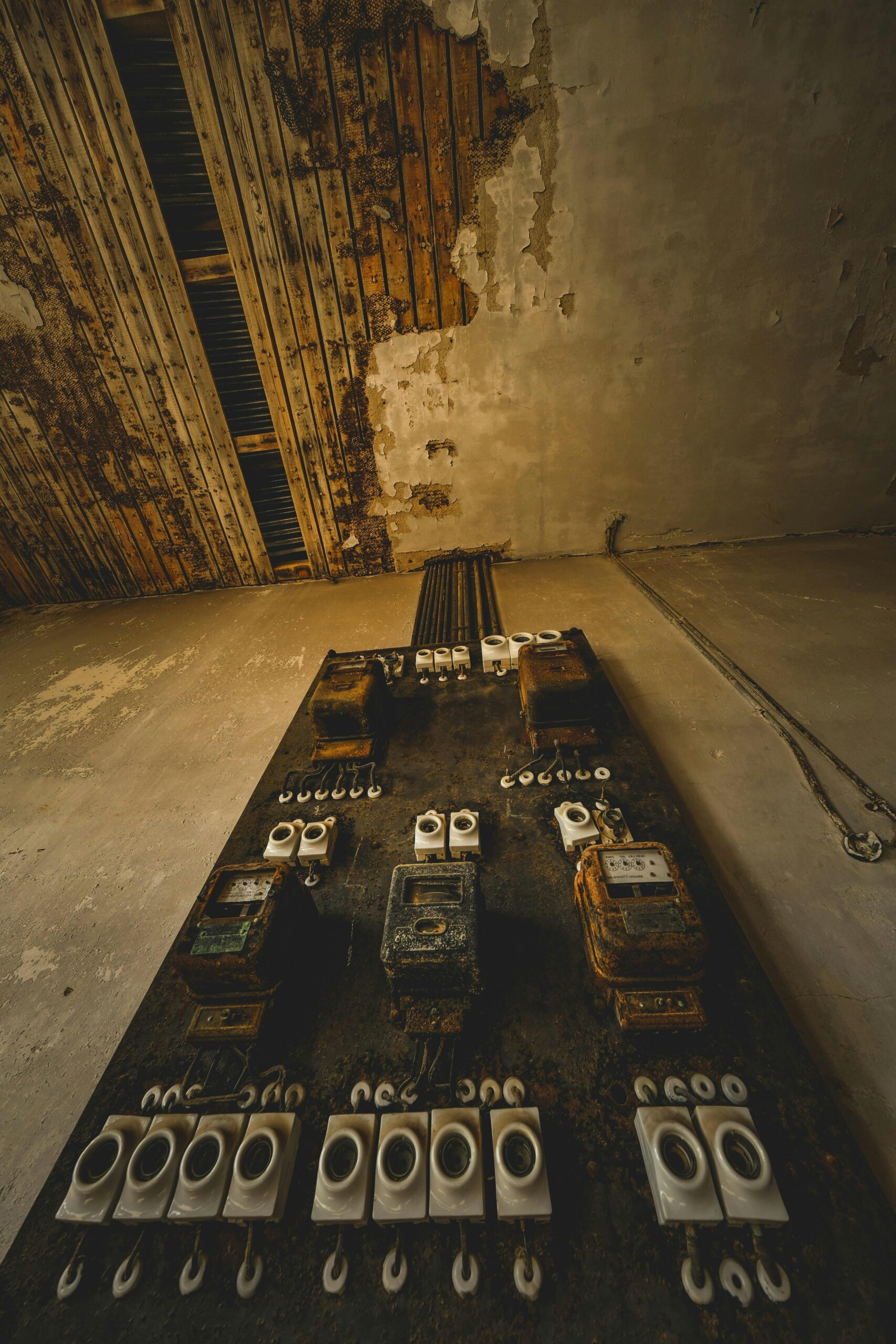
- Faulty or Unsafe Wiring: Deteriorated or non-compliant electrical wiring at the meter site, posing safety risks.
- Shared Fuses in Multi-Occupancy Buildings: Multiple meters sharing a single fuse, making isolation difficult.
- Meter Board Safety Hazards: Structural problems, corrosion, or inadequate mounting on the meter board.
- Electrical Faults in Older Buildings: Outdated earthing, insufficient capacity, or compatibility issues with modern smart meters.
- Inaccurate or Faulty Meter Components: Malfunctioning internal parts causing data inaccuracies and billing errors.
- Asbestos in Metering Installations: Presence of asbestos in older meter boards or panels, posing health risks during replacement.

Common Causes of Defect Notices
Improper Installation
Incorrect installation practices can lead to safety hazards and operational inefficiencies, prompting a Defect Notice.
Outdated Equipment
Using equipment that does not meet current standards can result in non-compliance and a subsequent notice.
Regulatory Non-Compliance
Failure to adhere to updated regulations can trigger a Defect Notice, necessitating immediate corrective actions.
Safety Concerns
Any potential safety risks identified during inspections can lead to a Defect Notice being issued for your property.
Explore Common Defects
Visual Guide to Defect Notices
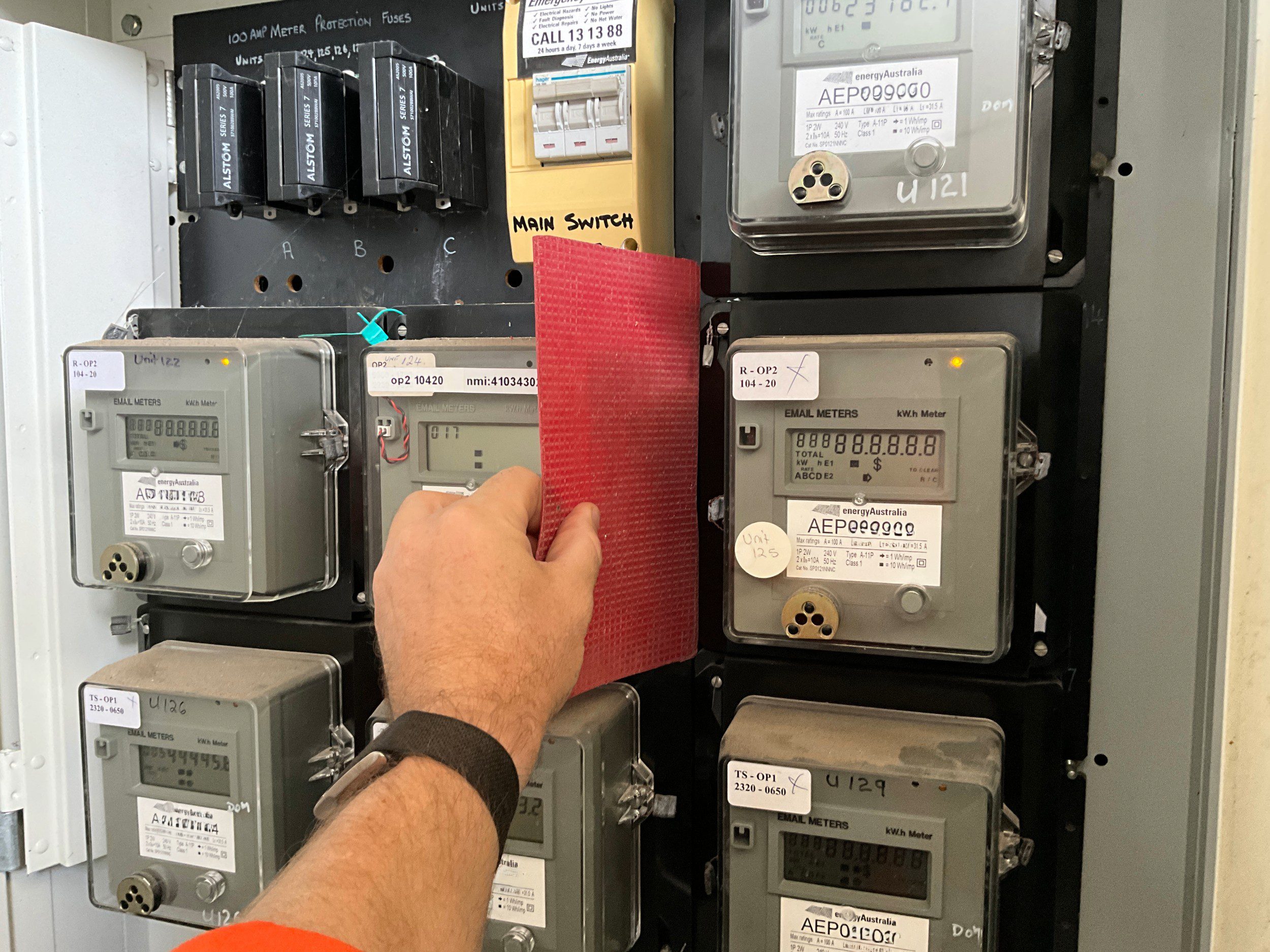
Spacing Issues
Lack of space available to remove and replace existing metering equipement. *sometimes possible if all meters are replaced in conjunction but ability will be site specific depending on required equipement to meet standards.
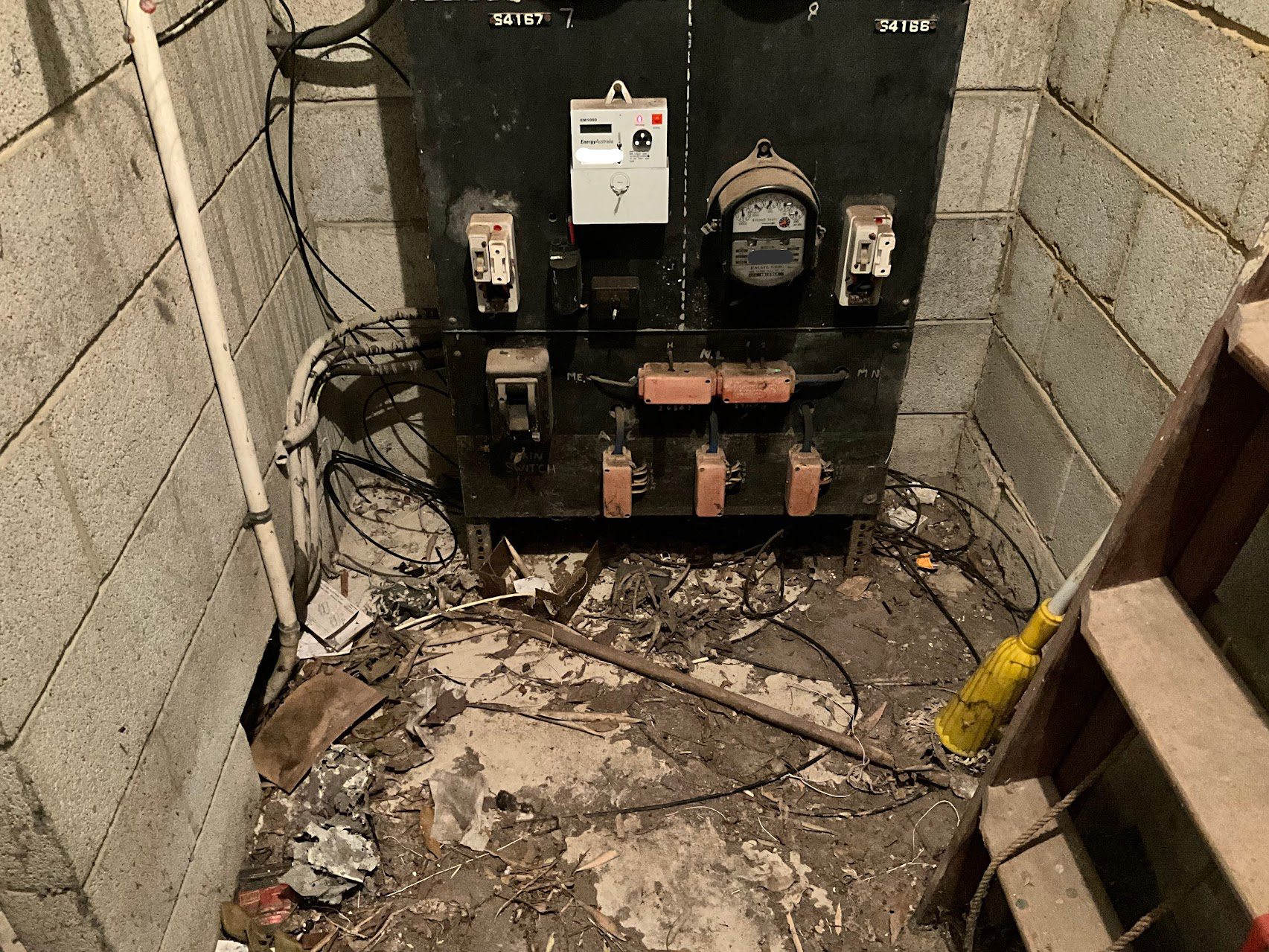
Poor maintenance and ACM contamination
Asbestos containing material in a meter room with visible dust and dirt accumlation on surrounding area. Additional material is being stored in meter room and room appears unmaintained.
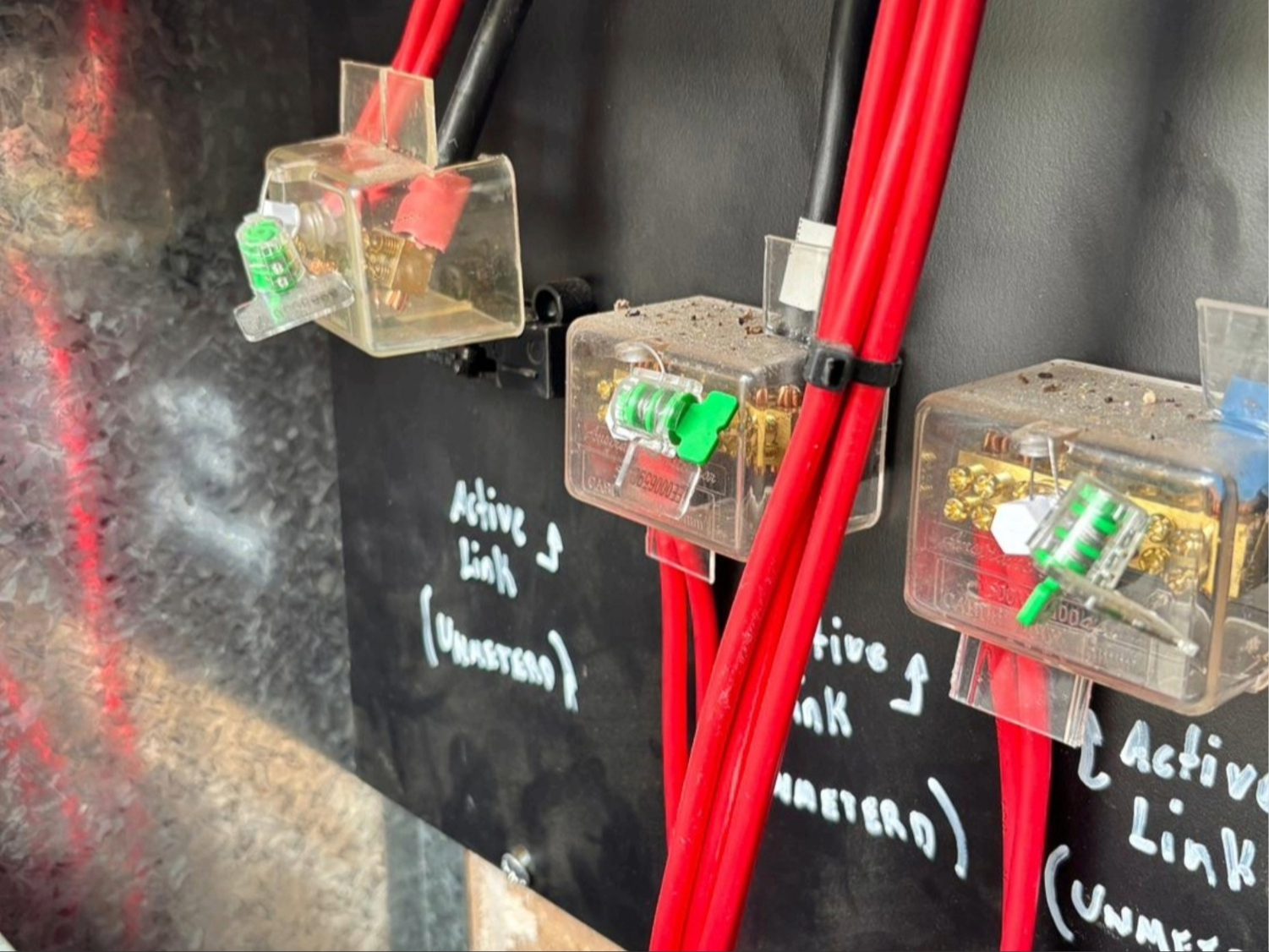
Broken Equipement
Broken active links risk arc flash or shock, especially when located next to a conductive material like the metal meter enclosure.
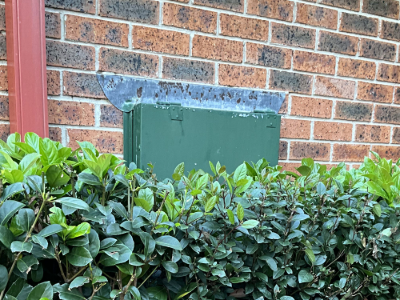
Foliage overgrown
Access to metering equipment is blocked by customer hedge. Clear access to metering equipement is required.
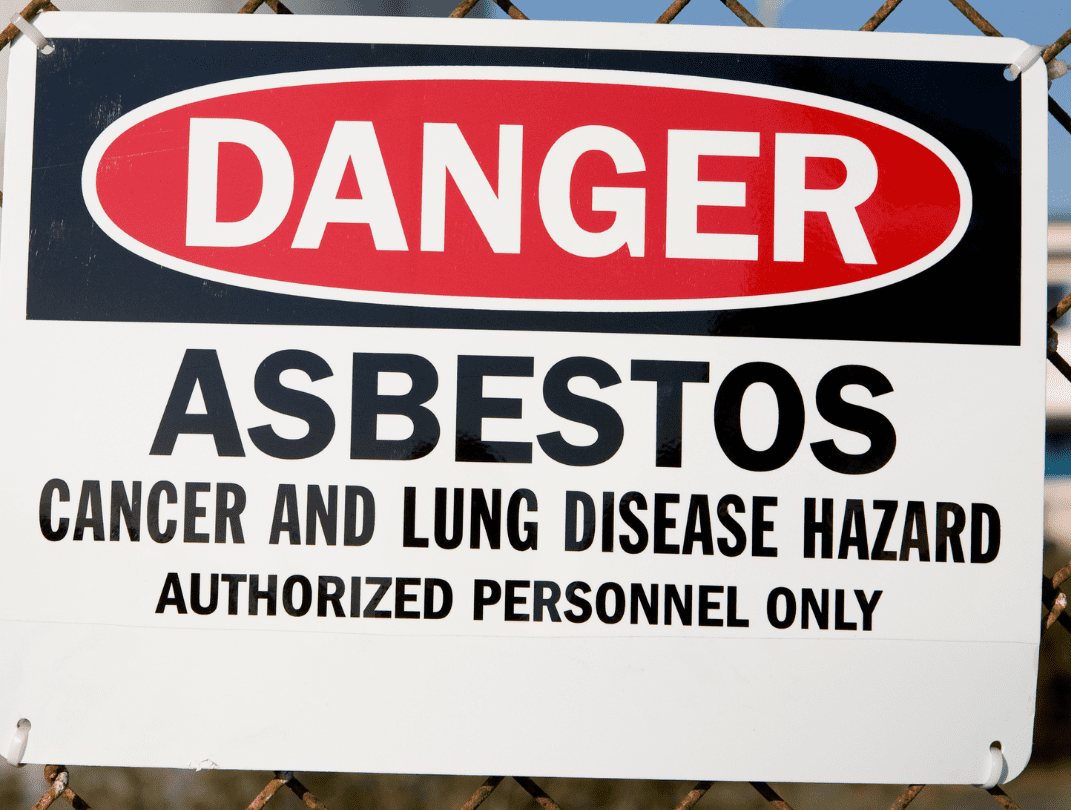
Asbestos
Asbestos material is common in electrical meter rooms. If properly maintained and approved procedures are used it can be worked on. Room should be free of dust and ACM material should be identified on a register as well as the material itself.
Steps to Resolution
Identify the Defect
Carefully review the Defect Notice to understand the specific issues highlighted by the retailer or regulator.
Consult with Tekwave
Contact our team of experts to discuss the details of your Defect Notice and receive personalized advice.
Implement Solutions
Follow the recommended steps provided by Tekwave to address and rectify the identified defects efficiently.
Need Help with Your Defect Notice?
If you’ve received a Defect Notice, Tekwave is here to assist you every step of the way. Our team of experts can help identify the root causes and provide you with clear, actionable solutions. Reach out to us today to ensure your issues are resolved swiftly and efficiently.