Understanding the Plan
The “One In, All In” Procedure for Shared Fuses
What Is It?
Purpose
This process targets sites with shared fuse arrangements, such as multi-residential buildings and apartments, where multiple customers share a single fuse. Traditionally, replacing meters required separate outages for each, causing inefficiencies and repeated disruptions. The One In All In approach is meant to streamline this by coordinating simultaneous meter replacements during a single planned outage, its meant to reduce customer inconvenience and improve efficiency. This method, introduced through Shared Fusing Meter Replacement Procedure, aims to make the rollout of smart meters more practical for complex shared sites.
Unraveling the Process for the Curious Mind
Understanding the One In All In (OIAI) process for replacing legacy meters
Efficiency Redefined
Our approach maximizes efficiency, reducing costs and impact on tenants, owners and management.
Collaborative Innovation
We partner closely with many stakeholders ensuring seamless collaboration on our processes as well as the OIAI process when required.
Leading the Way
Our process stands out as the only true alternative currently in the market that will replace both the meter and provide site rectification for eligible buildings at a lower cost to customers.
Implementation Triggers and Timelines
From Planning to Execution: A Step-by-Step Guide
1. Discovery/Notification of Shared Fusing (Trigger point
- Original MC becomes aware (e.g., during initial site visit for meter work).
- MC notifies relevant retailer(s) within ~5 business days (early guidance; final rules align with quick notification).
- Retailer notifies DNSP within ~5 business days of receiving notice
2. DNSP Scoping and Scheduling (20–30 business days window in many cases)
- DNSP visits/scopes the site to identify all affected NMIs (National Meter Identifiers) and customers.
- DNSP issues a Shared Fusing Meter Replacement Notice to all relevant retailers (and sometimes MCs) within 20–30 business days of initial notification (some drafts proposed 10–40 days; final allows reasonable scoping time).
- DNSP sets and notifies a planned outage date/time (Shared Fusing Meter Replacement Date), typically 25–65 business days after issuing the notice (outage must occur in this window; some flexibility for agreement or complex sites).
3. Notification to tenants
- Stakeholders will collaborate and liason with DNSP in identification and execution of OIAI process.
- work orders for meter replacements/repairs will be raised, and mandatory notification periods will be implemented for an outage date.
- work orders will be distributed to relevant stakeholders involved in executing meter exchanges.
4. Customer Notifications and Preparations
- DNSP notifies affected customers of the planned outage (required under rules)Retailers provide customer notices (e.g., under rules 59A/59C)
- including reasons, outage details, rights/responsibilities, potential costs, tariff changes post-smart meter installation, benefits, and contact info.
- Customers get advance warning; life support or access issues flagged via B2B notifications.
-
5. Outage and Replacement Day (On the scheduled date)
-
- DNSP performs group isolation (planned interruption or specific ccr) to safely de-energize the site.
- All attending metering technicians (or coordinated team) attend to replace/repair all legacy meters simultaneously.
- Outage times(will vary from 2 to several hours depending on site size. 8 hour outage allowed for greater then 10 meters).
- Supply restored post-works.
- commissioning of new meters occurs and submisison of mandatory regulatory documentation is carried out.
6. Post-Replacement
- Meters registered as Type 4 in MSATS.
- Retailers handle any tariff structure changes (with explicit informed consent period).
- If issues arise (e.g. comms issues, meter failure, discrepencies in billing. These issues will be escalated to nominated asset provider to investigate.
Challenges and Realities
Understanding the Plan's Challenges
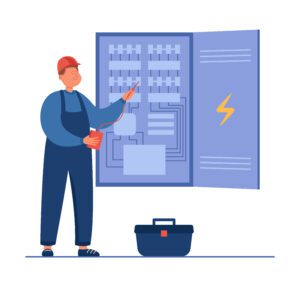
Implementing the plan has revealed several challenges that were not initially anticipated. The complexities of the project have necessitated adaptations to facilitate market needs. Each site, being unique in its challenges across all networks in the NEM (National Electricity Market), requires an adaptive approach to completing this large-scale project.
On-site realities add layers of complexity, presenting logistical challenges and compliance issues that often arise unexpectedly. These obstacles demand flexible strategies and ongoing communication to ensure that progress remains aligned with the intended goals. Each site presents its own unique complexities, making effective planning a ardouos task.
Exploring New Horizons
These alternatives are not just theoretical; they are grounded in practical insights and industry expertise. As we continue to navigate the complexities of the LMRP, our focus remains on delivering value and excellence through adaptive and forward-thinking strategies.
Discover Your Building's Potential
An alternative exists for eligible buildings, take the first step to find out more and see if your building can benefit for our alternative.