
Empowering Smarter Energy Choices
Understanding the Legacy Meter Replacement Program (LMRP) for Strata Committees, Property Owners and Managers
Our Mission and Vision
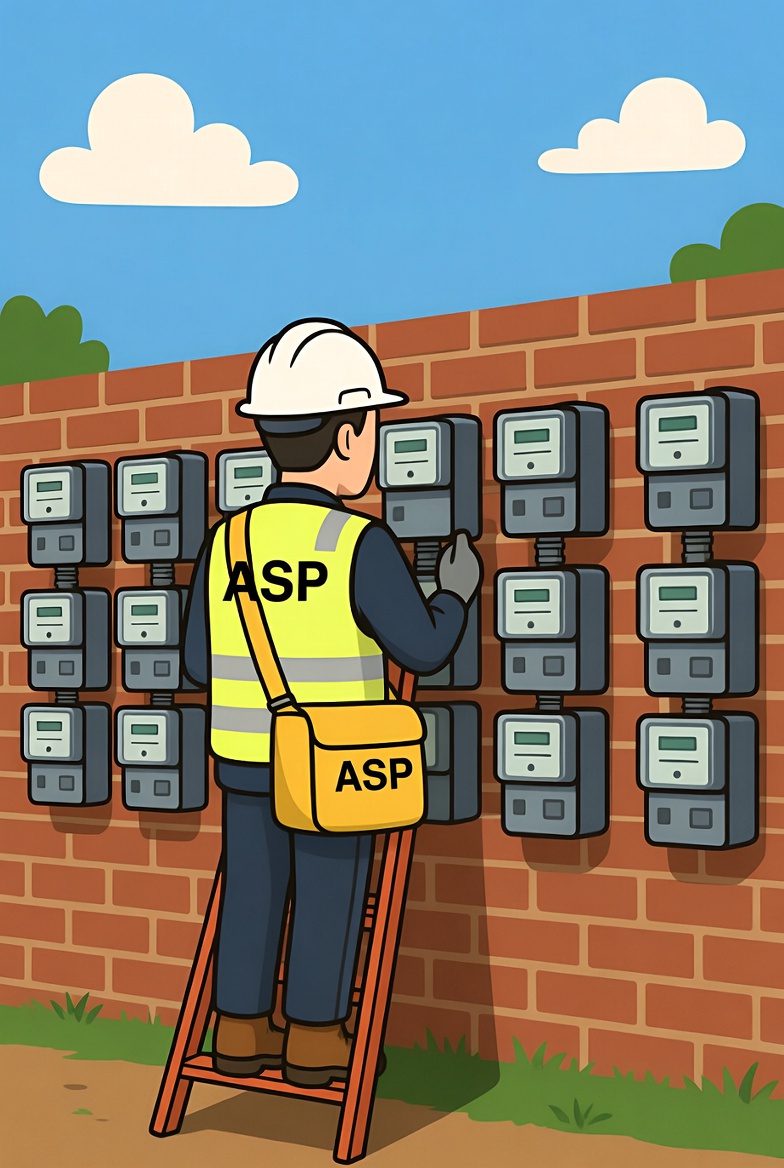
Thank you for taking the time to review this information. Our goal is to educate strata committees, tenants and strata managers about what is happening, how it will impact your building, and what your options are regarding the Legacy Meter Replacement Program (LMRP) currently being rolled out across Australia. We are a team of highly competent Level 2 ASP electricians who have worked on the meter replacement program since its inception in 2016. We specialize in multi-occupancy meter installations and replacements in both new and existing developments. With our experience and refined processes, we can complete these jobs safely and efficiently, having worked alongside industry stakeholders for nearly a decade.
Side-by-Side Process Comparison of Your Options.
All information on this site is derived from publicly available sources and is for the purpose of educating the public about the LMRP, its purpose and potential impacts. None of this information should be considered legal advice and is purely based off our industry experience and insights. Below are the three distinct options available to you which we are aware of, there may be more options available in the future as the program develops and more businesses come up with creative ideas to help accomplish the LMRP’s goals. Opting for inaction equates to choosing the middle process. For further insights into the program, please refer to the information provided below to gain a clearer understanding.
Engage level 2 ASP to Pre Install Fuses or rectify any defects
Higher Upfront Cost.
Removes the need for the OIAI process.
Requires 2 Power outages. 1 for the Rectification work and 1 for the meter replacement at later date.
Owners Corp needs to organise funding and engage contractor.
more disruption to building requiring trades to attend multiple times.
Still leaves you with no say in when the replacements are scheduled.
Wait for LMRP to schedule OIAI
No Upfront Cost for meter replacements but additional works cost are recoverable
Distribution networks decide dates for replacement thats suits scheduling needs.
Multiple Techs from different companies onsite working on the same panel possibly increasing outage times and disruption.
power outage times allowed across multiple days 8am - 4;30pm. Will vary due to site complexity.
Most techs will attend site for the first time on the day of the outage.
Techs will attend site for the first time on the day of the outage and a develop a plan.
Communication is only required to be directed to tenants, which can possible lead to property managers being out of the loop.
Engage Tekwave to provide fuses and replace meters
Fuse provided free of charge, and minor defects can be rectified at the same time. (Cost are not passed on to any other stakeholders, therefor cannot be recovered on)
Site is thoroughly pre scoped to allow accurate outage notice estimates and to premptively identify all defects.
We Keep you informed with our outage schedule. We keep everyone updated, enabling tenants to plan their work-from-home routines with ease.
One tech working efficiently on a meter panel, reducing disruption and outage time.
Site is prepped prior to power outage to reduce outage time.
One Cohesive team completing all work with a plan in place prior to arrival.
Understanding the LMRP

The Legacy Meter Replacement Program (LMRP) is part of Australia’s national accelerated rollout to replace all older “legacy” electricity meters, including annual or basic non-smart Type 5/6 meters, with modern smart meters (Type 4) across the National Electricity Market. This market covers New South Wales, Queensland, South Australia, Victoria, Tasmania, and the Australian Capital Territory.
The LMRP is driven by rules set by the Australian Energy Market Commission (AEMC) under the Accelerating Smart Meter Deployment reforms. Electricity distributors develop Legacy Meter Replacement Plans, which must be approved by the Australian Energy Regulator (AER). These plans schedule the replacements, typically in phases from late 2025 through to November 30, 2030. Your electricity retailer is responsible for arranging the actual installations through metering coordinators and their contractors.
Participation became mandatory December 1 2025 for customers; opting out is not permitted. The rollout is required by changes to the National Electricity Rules, with the aim of achieving full smart meter coverage by the end of 2030. The main reasons for this initiative include:
- Enabling a more efficient, flexible, and renewable-energy-ready electricity system.
- Providing better real-time data for usage monitoring, faster fault detection, and improved network management.
- Supporting consumer benefits such as time-of-use tariffs, easier retailer switching, and integration of solar and batteries.
- Reducing long-term costs by improving grid operations and eliminating manual meter readings.
- Creating a more competitive electricity market to benefit consumers.
Program Cost Overview
When researching the program, you will often encounter statements such as “No Upfront Costs for the meter replacements”. This can cause some confusion. While this is true in most cases for sites that are compliant with current standards, the reality is that having the privalege of being connected to the electricy grid has always had costs associated with maintaining and modernising it. These cost are built into our electricity bills through tariffs and connection fees. For sites that are compliant with current standards, there will be no upfront charges for meter replacements. However, if additional work is needed – particularly on sites with shared fusing or that has defective equipement – a new individual Meter Protection Device (MPD) must be installed for each unit. Defects that pose a safety issue or impact the ability of the installer to complete the meter exchange also need to be rectified. Sometimes this is possible on the day of the exchange, but often it can require the property owner to rectify the issue prior to rebooking the job. These costs are recoverable because they are considered customer equipement, similar to your circuit breakers and power points.

We understand not all people wish to have their meter replaced for any number of reasons. A common cause is fear of tariff changes. That is why Protections were added to prevent tariff structure changes without explicit consent for a period of two years after replacement.
Legislative Shifts
Potential Impact of Recent Legislation Changes
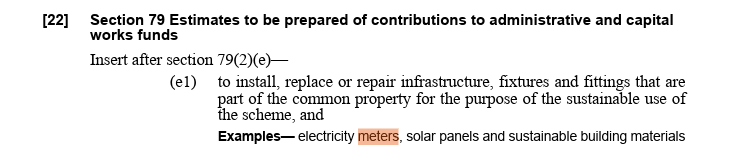
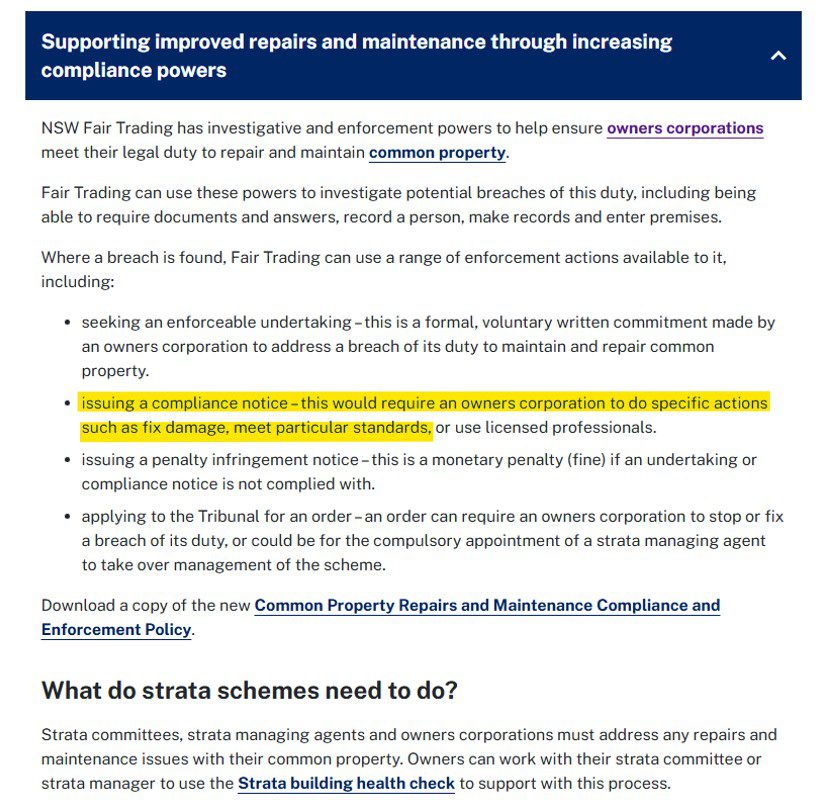
In our opinion, recent changes to the Strata Act suggest that if the current process appears it will achieve the 2030 target, new solutions are possible as foundations have been laid in updated strata laws to keep the 2030 target on track. Specifically under section 79 of Strata Schemes Management Act 2015 No 50, amendments have recently granted additional powers to Fair Trading, strengthening enforcement of defect rectification and requiring sites to be brought up to current standards, possibly even if they were compliant at the time of construction.
Why Is this Important?
These changes are most likely to impact properties that may have lacked proper maintenance over the years and their equipement may now be very outdated or unsafe to operate. When isolating an entire building or floor riser where meters are located, it is very important to have confidence that the equipement will be able to be turned back on. This is a tough assessment for a person with no history of the property and is usually based off a visual inspection. If the person perfoming the isolation isn’t confident in the equipements ability to operate, repairs or replacement may be required prior to any isolations. It is very important to make sure equipement is maintained in good working order to avoid extended outage times or costly rushed repairs.
Common Defects to Watch Out For
Sites with shared fusing are now identified and labelled as defects when preventing meter replacements. Currently, Stakeholders are assuming responsibility for installing MPDs during replacements as part of the LMRP, with the cost recovered later. However, there is no rule in the National Electricity Rules (NER) or National Electricity Retailer Rules (NERR) requiring them to do so. If the “One in All In” process is deemed unworkable, responsibility for rectification works could be passed on to Owners Corporations for share fusing sites or identified defect sites which are already considered the property owners responsibilty. This would require the property owners to arrange installations and rectifications before meters can be replaced. Info about common defects can be found on our defect notice page and guidance on potential costs can be found on many strata websites, and these costs can be significant depending on what is required, especially for larger sites, possibly requiring a special levy if not budgeted for. It is important to have a qualified person proactively assess your properties equipement to ensure you don’t get caught needing rushed repairs.
Transformative Solutions Powered by Customer Connection
Our Solution to the Current Challenges...
What We Offer...
This is where our team comes in. We offer alternative pathways to achieve the same goal—replacing all legacy meters—more efficiently, saving money, and minimizing power outages. All it requires from you is to get informed and then get in touch with us, and we can distribute our eform to you remotely via your property manager or comittee. Its a basic form, all thats needed is name, address, retailer and NMI which is all located on your electricity bill. Its that simple we do the rest.

How Do We Accomplish This?
By engaging us as the sole contractor for meter replacements and any required rectification work, we can achieve significant efficiencies by reducing the need for additional coordination under the current plan. These efficiency gains allow us to thoroughly scope and plan the replacement schedule to fit a more accurate timeline, reducing disruption to tenants affected by outages. Additionally, the increase in efficiency currently enables us to provide and install the MPD free of charge as part of our process.
*If we do not pass on costs, they cannot be recovered from you.
*Rectification work can be identified and repaired within a reasonable scope by us. Anything we deem outside of that scope will be reported to you to allow you to determine what the best course of action is for your particular site.
Maximizing Benefits for All Stakeholders
What Benefits Us?
As outlined, we are compensated for our work via existing channels . Throughout this process strive to achieve efficiency gains in areas which we will not be compensated for (pre-scoping, site coordinations of all parties) but we believe through the volume projected we can absorb these costs and pass on the savings to other stakeholders. We are keen to offer our process because it is significantly more efficient in our opinion, enabling us to pass savings onto you while we benefit from enhanced efficiency as well. In our view, this approach is safer, quicker, and yields better outcomes for everyone, all while substantially lowering overall program costs. Like you, we are consumers of electricity and understand the challenges posed by rising costs.
What Benefits Can You Expect
While we may not have exact figures on the impact of the meter replacement program on rising costs, we are confident that our streamlined process can significantly help alleviate these expenses for both you and your Building. We believe that when adopted on a broader scale, our approach can effectively slow down or even reduce price increases for everyone. It all starts with individuals like you being informed and actively engaging in the solution. We encourage others to think outside the box to and to find ways to help achieve the same goals, and all play a part in helping to modernize our energy systems.
Even if you don’t believe your property has any of the above issues, but still want to access the savings ability of the new meters, reach out to us! We’re always looking for other ways to help the process along and we’ll see what we can do for you!
Reduce Recovered Costs
By Removing Costs for additonal works, we reduce the overall cost that can be recovered by stakeholders.

Reduced Disruption
By Choosing to engage us as the sole contractor for your meter replacements, we can tailor a outage schedule that suits the strata, property managers and their clients.
No Budgeting in 10yr Plan
By having us install the Fuses at no cost we remove the need for budgeting for rectification work to meet current standards.
Your Path to Seamless Metering
Step 1: Initial Consultation
Contact us to schedule an initial consultation where we assess your current metering setup to see if it is eligible and discuss your specific needs and goals.
Step 2: Customized Proposal
Receive a tailored proposal outlining our recommended solutions, timelines, and cost estimates, ensuring transparency and clarity.
Step 3: Implementation
Once the proposal is approved, our team will swiftly implement the solution, providing ongoing support and maintenance to ensure optimal performance.